Published · Updated · Right Point
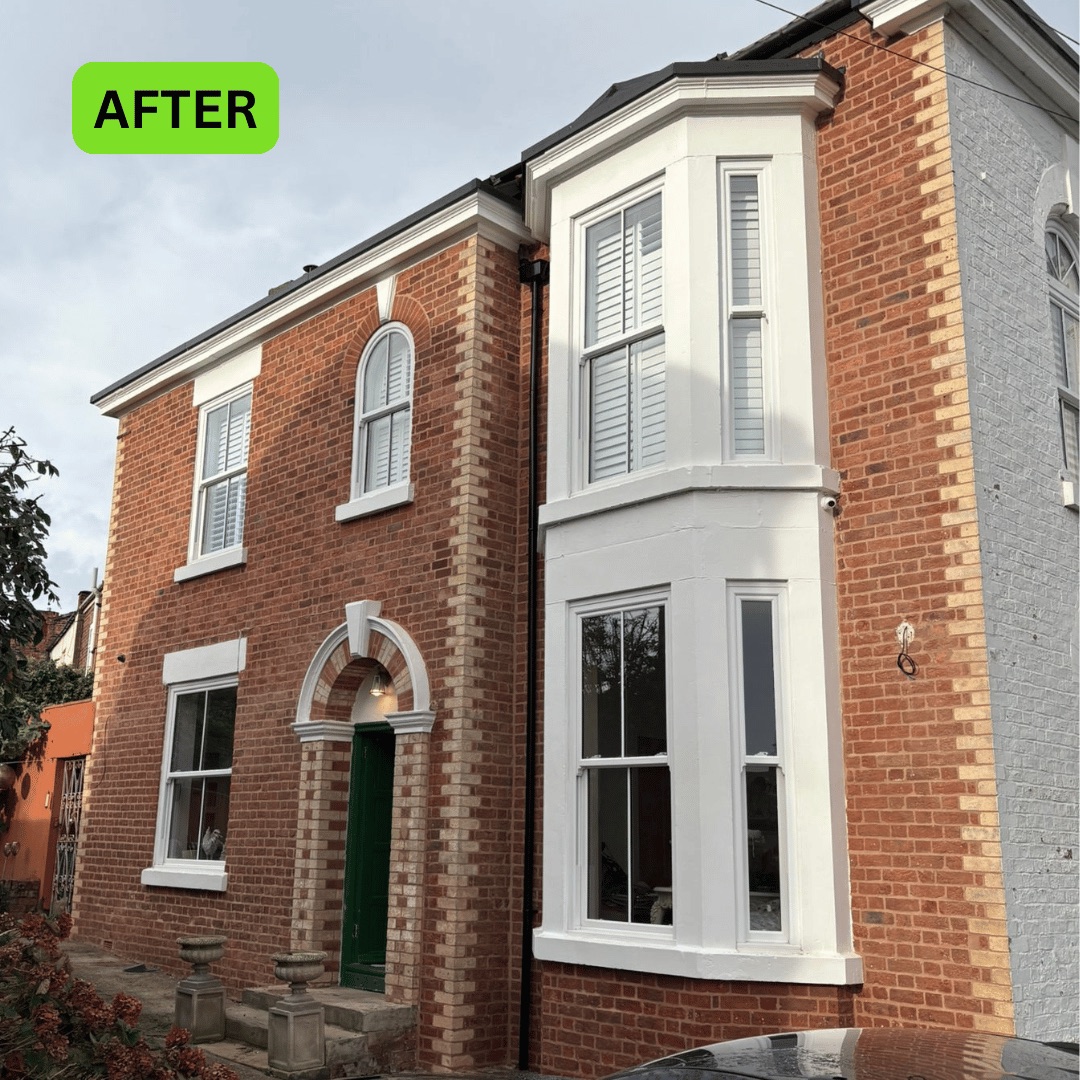
Brick cleaning can transform a tired elevation, but the wrong technique can permanently scar brick faces, erode mortar or spread staining. Successful cleaning starts by identifying both the masonry and the contaminant, then testing the gentlest effective process in an inconspicuous area.
Why exterior brickwork becomes stained
Urban pollution, traffic film, algae, paint, salts, rust and old construction residue all behave differently. A product that removes organic growth may have little effect on mineral deposits, while an acid selected for one brick type can discolour another.
The wall itself also varies. Fired clay brick, engineering brick, soft handmade brick, stone details and mortar joints may sit side by side but respond differently to water, chemicals and abrasion. Identification must come before treatment.
Common professional brick cleaning methods
No single method is safest for every wall. Contractors may use one approach or a carefully controlled combination.
Low-pressure water cleaning
Controlled water and agitation can remove loose dirt and some biological growth. Saturation, runoff and drying conditions still need managing, particularly on porous masonry and in cold weather.
Chemical brick cleaning
A product chosen for the specific stain can loosen pollution, mortar residue, paint or organic deposits. Correct dilution, dwell time, neutralisation and rinsing are critical, and surrounding glass, metal, plants and paving need protection.
Specialist abrasive or steam systems
Specialist low-impact systems can be useful for certain coatings and sensitive surfaces when operated by trained contractors. Conventional aggressive sandblasting can strip the protective fired face from brick and should not be treated as a general cleaning solution.
How pressure washing can damage bricks
Yes. Excessive pressure or a narrow nozzle held too close can roughen brick faces, deepen joints and drive water into the wall. Damage may not become obvious until the masonry dries or passes through later freeze-thaw cycles.
Pressure is only one variable: water volume, temperature, nozzle angle, distance and the condition of the wall all matter. A domestic pressure washer should not be assumed safe simply because it removes dirt quickly.
Why a test patch is essential
A test area shows whether the proposed method achieves an acceptable result without colour change, surface erosion or joint damage. It also establishes working concentration and dwell time before a product is applied across a prominent elevation.
The patch should be allowed to dry fully before approval because wet brick often appears darker and more uniform. Cleaning may reveal natural variations, historic repairs or staining that was previously hidden by a coating.
Planning the sequence of cleaning and repointing
The sequence depends on the cleaning process and joint condition. Heavy cleaning can disturb already loose mortar, while fresh lime or cement joints can be stained by inappropriate chemicals. Contractors should plan the two operations together rather than treating them as unrelated jobs.
Often, loose material and urgent defects are made safe first, cleaning trials follow, and final repointing is completed with suitable protection. The chosen method should avoid forcing excessive water through open joints.
Removing paint from brickwork
Many masonry paints and coatings can be removed, but results depend on the product, number of layers, brick porosity and previous preparation. Paint may have penetrated deeply or be concealing repairs and mismatched bricks.
Chemical poultices, specialist systems and careful hand work may be considered after trials. Burning, harsh blasting or uncontrolled grinding can damage the brick face and create hazardous dust or fumes. Expectations should be based on a representative test panel.
How to keep cleaned brickwork looking good
Resolve the source of staining, whether that is an overflowing gutter, leaking coping, vegetation, corroding metal or traffic splash. Otherwise the newly cleaned wall may become marked again quickly.
Sound pointing and well-maintained drainage provide better long-term protection than repeated aggressive cleaning. Water repellents are not automatically required and should be considered only when compatible with the masonry and the wall's need to dry.