Published · Updated · Right Point
Repointing can help stop damp when rain is entering through cracked, missing or porous mortar joints. It is not, however, a universal damp treatment. Moisture can come from roofs, gutters, plumbing, condensation or ground-level defects, and applying new mortar without finding the source can leave the real problem untouched.
How failed pointing allows water into a wall
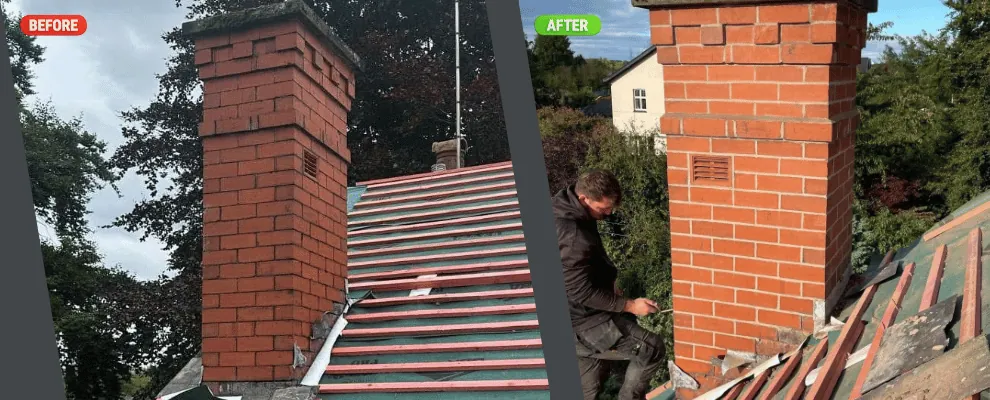
Sound mortar closes the joints between masonry units and helps a wall manage rain. As joints crack or erode, wind-driven water can travel deeper into the construction. Exposed gables, chimney stacks, parapets and areas around openings are particularly vulnerable.
Moisture may then appear on internal finishes after sustained or directional rain. The location and timing provide useful evidence: a patch that worsens after storms suggests a different mechanism from general surface condensation during cold weather.
When repointing is likely to help with damp
Repointing may be part of an effective repair when inspection finds a clear external path through deteriorated joints.
- Mortar is missing, deeply eroded or visibly cracked across the affected elevation.
- Damp becomes worse after wind-driven rain rather than ordinary indoor activity.
- Chimney, parapet or high-level joints are open and exposed to weather.
- Water staining aligns with a local area of failed masonry rather than a pipe or roof defect.
- Incompatible hard pointing is contributing to wet or spalling historic brickwork.
Other causes that repointing will not fix
Overflowing gutters, cracked render, failed flashing, leaking pipes, bridged damp-proof courses and high external ground levels can all introduce moisture. Condensation is created inside when humid air meets a cold surface and needs a different approach involving ventilation, heating and moisture control.
A wall can also have more than one defect. For example, a leaking gutter may saturate already weathered joints. In that situation, repairing only the mortar allows the drainage fault to damage the new work.
Why breathable mortar matters in older buildings
Traditional solid walls often rely on vapour-permeable materials to absorb and release moisture. A compatible lime mortar encourages evaporation through the joints, where future weathering can be repaired more easily than damaged bricks.
Dense cement pointing or impermeable coatings can restrict drying in some older walls. Water may be diverted through softer bricks or remain trapped behind finishes. The remedy is not simply to use the softest mix available; the mortar must be specified for the actual masonry and exposure.
What a damp and brickwork inspection should check
A sensible inspection starts outside and above the visible symptom. It should examine roof coverings, chimney flashings, rainwater goods, window details, cracks, ground levels and the condition of both bricks and mortar. Inside, the distribution of staining and its relationship to weather and occupancy help narrow the cause.
Moisture readings can support an investigation but should not be interpreted in isolation. Salts and conductive materials can affect handheld meters, so physical evidence and the behaviour of the building matter too.
How repointing for water ingress is carried out
Once failed pointing is confirmed, loose mortar is carefully removed without damaging the brick edges. The joints are cleaned and prepared before compatible replacement mortar is packed in firmly and finished to a suitable profile. Adjacent spalled bricks may also require replacement.
The new work needs controlled curing and protection from heavy rain, frost, strong sun and rapid drying. After completion, a previously wet wall can take time to dry; internal finishes should not be redecorated until the moisture source is resolved and the fabric has had a realistic drying period.
Sealing brickwork after repointing
A water-repellent treatment is not automatically necessary after repointing. Sound masonry with good joints, copings, flashings and drainage should be the first line of defence. An unsuitable coating can reduce breathability or conceal continuing defects.
Where a treatment is being considered for unusually exposed masonry, it should be compatible, vapour permeable and applied only after repairs and adequate drying. A small trial area and manufacturer guidance help reduce the risk of an unwanted change in appearance.