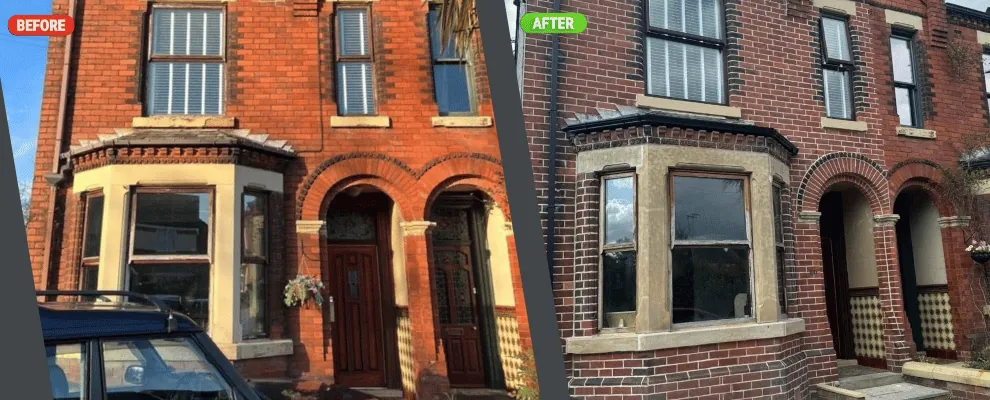
Published · Updated · Right Point
Mortar joints are designed to protect brickwork, but decades of rain, frost, pollution and movement gradually wear them down. Recognising the early signs of failure can make the difference between straightforward repointing and a larger programme of brick repairs. Here are seven symptoms worth checking.
1. Mortar is crumbling or turning to powder
Gently rubbing a joint should not cause sound mortar to fall away in handfuls. If the surface powders, flakes or can be scraped out easily, the binder may have deteriorated and the joint may no longer shed water effectively.
Check several parts of the wall rather than relying on one isolated patch. Chimneys, parapets, corners and elevations facing prevailing weather often deteriorate first because they receive more wind-driven rain and frost exposure.
2. Gaps or recessed channels have formed between bricks
Weathering gradually erodes the face of a mortar joint. Once it has receded significantly or left open gaps, water can sit on ledges and penetrate deeper into the wall. Deep joints also provide less support around the edges of the bricks.
A recessed joint is not automatically defective because some joint profiles are deliberately set back. The warning sign is progressive, uneven loss of mortar rather than a consistent original finish.
3. Cracks are running through the mortar joints
Fine local cracks can result from shrinkage or normal weathering, while stepped, widening or recurring cracks may indicate movement that repointing alone will not solve. The pattern, width and history of a crack matter.
If cracks extend through bricks, change quickly, or coincide with sticking doors and windows, seek an appropriate structural assessment. Filling a moving crack without addressing its cause is only a temporary cosmetic repair.
4. Damp appears near an external brick wall
Failed pointing can create a route for wind-driven rain, particularly around exposed walls, chimneys and openings. Internally, this may appear as damp patches, peeling finishes or musty areas after prolonged wet weather.
Damp has many possible causes, including gutters, flashings, plumbing, ground levels and condensation. Repointing helps only when defective joints are part of the moisture path, so diagnosis should come before repair.
5. Brick faces are flaking or breaking away
Spalling occurs when the face of a brick flakes, cracks or detaches. Saturation and freeze-thaw cycles are common contributors, and very hard, impermeable pointing can sometimes force moisture through softer bricks.
Damaged bricks may need individual replacement alongside repointing. Simply covering a spalled face does not restore the masonry and may trap more moisture behind the repair.
6. Previous patch repairs are failing
Small areas of fresh mortar surrounded by cracks, gaps or mismatched hard pointing suggest that earlier work treated the symptom rather than the complete defective area. Thin mortar smeared over existing joints is especially prone to detachment.
Proper repointing removes failed material to an adequate depth, cleans the joint and packs it fully with a compatible mortar. A neat surface is not enough if the material beneath it remains loose.
7. The wall looks uneven after heavy rain
Patches that remain wet much longer than surrounding brickwork can highlight differences in porosity, blocked moisture paths or local defects. White salts, algae and repeated staining may also point to persistent moisture movement.
Photographing the same wall in dry and wet conditions can help a contractor understand the pattern. The source may be pointing, but roof drainage and nearby details should also be inspected.
Knowing when to arrange a brickwork inspection
Arrange advice when mortar loss is widespread, damp is recurring, high-level masonry is affected, or bricks have begun to loosen or spall. Earlier intervention usually preserves more original material and makes it easier to plan access and weather protection.
A useful quotation should identify the area to be raked out, the intended mortar, any brick replacements and how dust and debris will be controlled. It should also distinguish repointing from repairs needed to gutters, flashings or structural cracks.